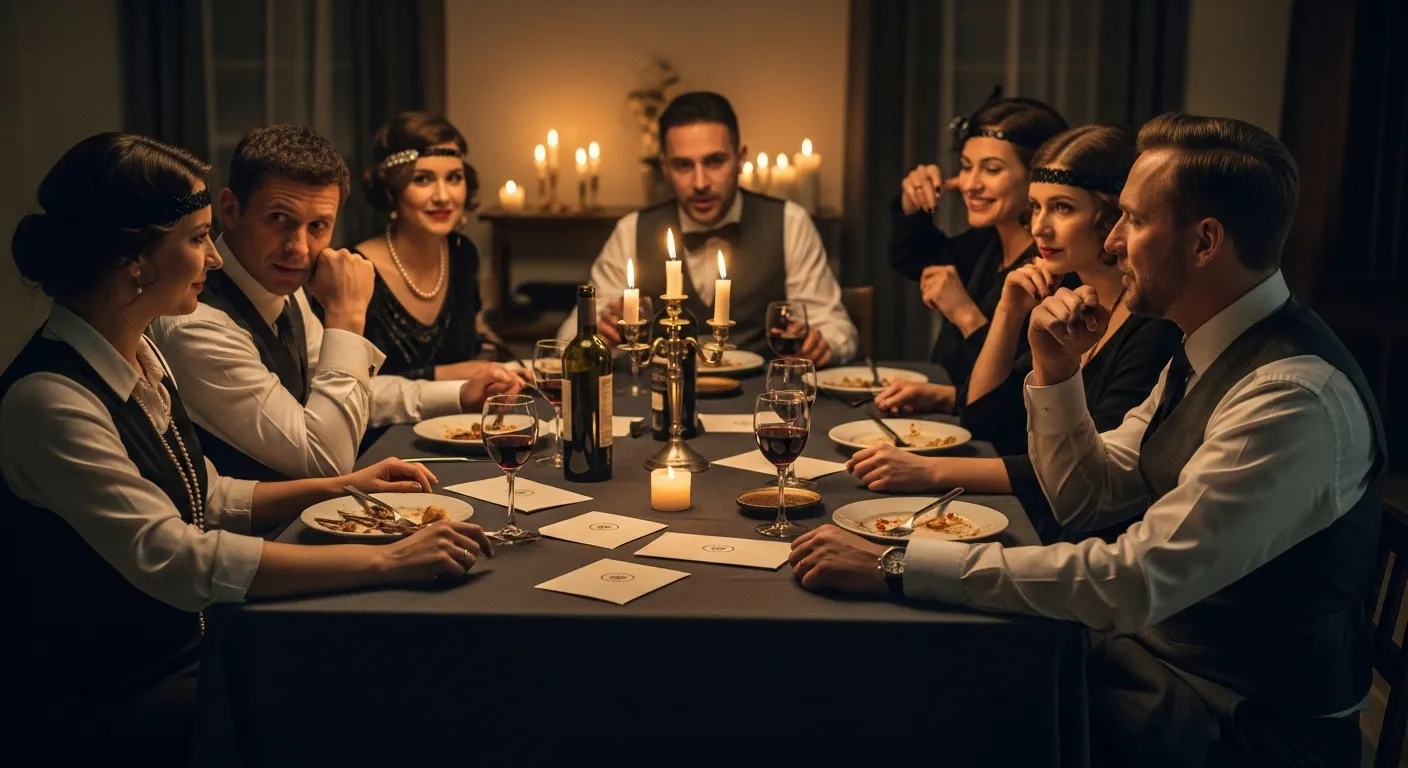
Imagine your living room transformed into a 1920s speakeasy. Your guests arrive in period-perfect costumes, each clutching a sealed envelope containing their character’s darkest secrets. By the end of the night, someone will be accused of murder — and no one will know who did it until the final dramatic reveal. That is a murder mystery party, and it is one of the most unforgettable things you can host.
In 2026, murder mystery parties are having a serious moment. As interactive and immersive experiences continue to replace passive gatherings, more hosts are turning to this format for birthdays, holiday events, team-building nights, and even casual friend get-togethers. The appeal is simple: everyone has a role, everyone is invested, and no one sits on the sidelines. This step-by-step guide covers everything you need to pull it off — from picking your theme to delivering the final reveal — whether it is your very first time hosting or you are looking to level up your next mystery night.
What Exactly Is a Murder Mystery Party?
A murder mystery party is an interactive group game where guests play fictional characters caught up in a crime. Someone has been “murdered,” and everyone works together — or against each other — to figure out who did it. Think of it as a live-action version of the board game Clue, but with better costumes, a real dinner, and far more dramatic accusations.
The evening typically unfolds in three acts: guests arrive, mingle in character, and share clues about themselves and others; the “murder” is revealed and the investigation begins in earnest; and finally, everyone votes on who they believe the killer is before the host reveals the truth. The best part? Even the killer does not always know they are the killer until the very end — depending on the game format you choose.
Murder mystery parties work for almost any group size, from an intimate dinner of six to a large gathering of thirty or more. They scale well, adapt to any theme, and tend to turn even the shyest guests into enthusiastic participants once the drama gets going. If you want more inspiration for immersive party formats that pair well with this one, check out the Micro-Theme Party Ideas guide on Party Monster — the same hyper-specific approach that works for micro-themes works beautifully for murder mystery nights too.
Step 1: Pick Your Theme
Your theme is the foundation of the entire evening. It determines the costumes, the decorations, the music, the food, and the storyline. The more specific and committed your theme is, the more immersive the experience will feel for your guests.
Popular Murder Mystery Themes to Consider
Some of the most beloved and reliably fun murder mystery themes include:
- 1920s Speakeasy — Jazz, bootleggers, flappers, and Prohibition-era drama. This is one of the most visually stunning themes to decorate for, and the costumes are always a hit.
- Classic Victorian Whodunit — Think candlelit mansions, butler characters, aristocratic suspects, and a Sherlock Holmes-era aesthetic.
- Hollywood Red Carpet Murder — A glamorous awards night gone deadly wrong. Great for groups who love drama and over-the-top costume moments.
- Wild West Showdown — Cowboys, saloons, wanted posters, and a murder at the poker table. Perfect for a more casual, rowdy crowd.
- Masquerade Ball — Hidden identities, elegant masks, and a mystery where no one quite knows who anyone really is.
- Retro Prom Night — A playful 80s or 90s prom setting with plenty of comedy built into the storyline. Excellent for groups who want laughs alongside the suspense.
The right theme is the one your specific group will commit to. If your guests love dressing up and going all-in, choose something that rewards elaborate costumes. If your group is more casual, opt for a theme where simple accessories carry the look — a bandana and cowboy hat for the Wild West, or a blazer and pearl necklace for Classic Noir.
Step 2: Choose Your Game or Write Your Own
Once you have your theme locked in, you need the actual game mechanics — the story, character descriptions, clues, and instructions that will guide the evening. You have two main options here: use a ready-made game kit or write your own.
Ready-Made Game Kits
For first-time hosts and anyone who wants a stress-free setup, a downloadable or boxed murder mystery game kit is the way to go. These kits come with everything you need: character profiles for every guest, a complete storyline, clue cards, host instructions, and often bonus materials like themed invitations, menu suggestions, and award certificates.
Reputable providers like Night of Mystery offer a wide range of downloadable kits spanning different themes, group sizes, and difficulty levels. Over 80% of their parties are hosted by first-timers, which tells you how beginner-friendly the format is when you have a solid kit guiding you. Look for a kit that specifies a character count matching your guest list — most games have a minimum and a maximum player count, and the story works best when the roles are filled correctly.
Writing Your Own Mystery
Writing your own murder mystery is a bigger time investment, but it allows you to completely personalize the experience — including inside jokes, real connections between your guests’ characters, and a storyline designed specifically for your group. If you want to create your own, start with a theme and a victim, then build out characters who all have motives and connections to that victim. Each character needs a secret that can be revealed strategically during the evening, and the story needs enough red herrings to keep the real murderer hidden until the final vote.
This works best for smaller groups of six to ten where you know the guests well and can tailor the comedy and drama accordingly. For larger groups or first-time hosts, a ready-made kit is the more reliable choice.
Step 3: Invite Your Guests and Assign Characters
Send invitations at least three to four weeks before the event — earlier if your theme requires elaborate costumes. Your invitation should do more than list the time and address. It should drop guests directly into the world you are building, written in the voice of the theme if possible. A 1920s speakeasy invite might read like a secret telegram. A Victorian whodunit invite might arrive as a “summons to a dinner party at the manor.”
Assigning Characters Early
Include each guest’s character assignment with the invitation or send it separately shortly after RSVPs are confirmed. The character packet should tell your guest who they are, what they do, what their connections to the other characters are, and what secrets they are hiding. The more time guests have to sit with their character, the more committed and creative they will be on the night itself.
When assigning characters, think carefully about your guests’ personalities. Give shyer guests roles that are interesting but do not require them to initiate conversations with every other player. Give your most outgoing, theatrical friends the juicier roles with more dramatic secrets. A well-cast mystery feels effortless; a poorly cast one can stall out in the first half hour.
For digital invitations that can be styled to fit almost any aesthetic — from elegant and vintage to dramatic and moody — Paperless Post offers a range of customizable designs that are easy to personalize with your theme details and character instructions.
Set the Scene: Atmosphere and Decorations
The atmosphere is what transforms a regular dinner party into a world guests believe in, at least for a few hours. You do not need a Hollywood budget to pull this off. The most effective murder mystery atmospheres are built on three things: lighting, sound, and a few well-chosen props.
Lighting, Music, and Decor
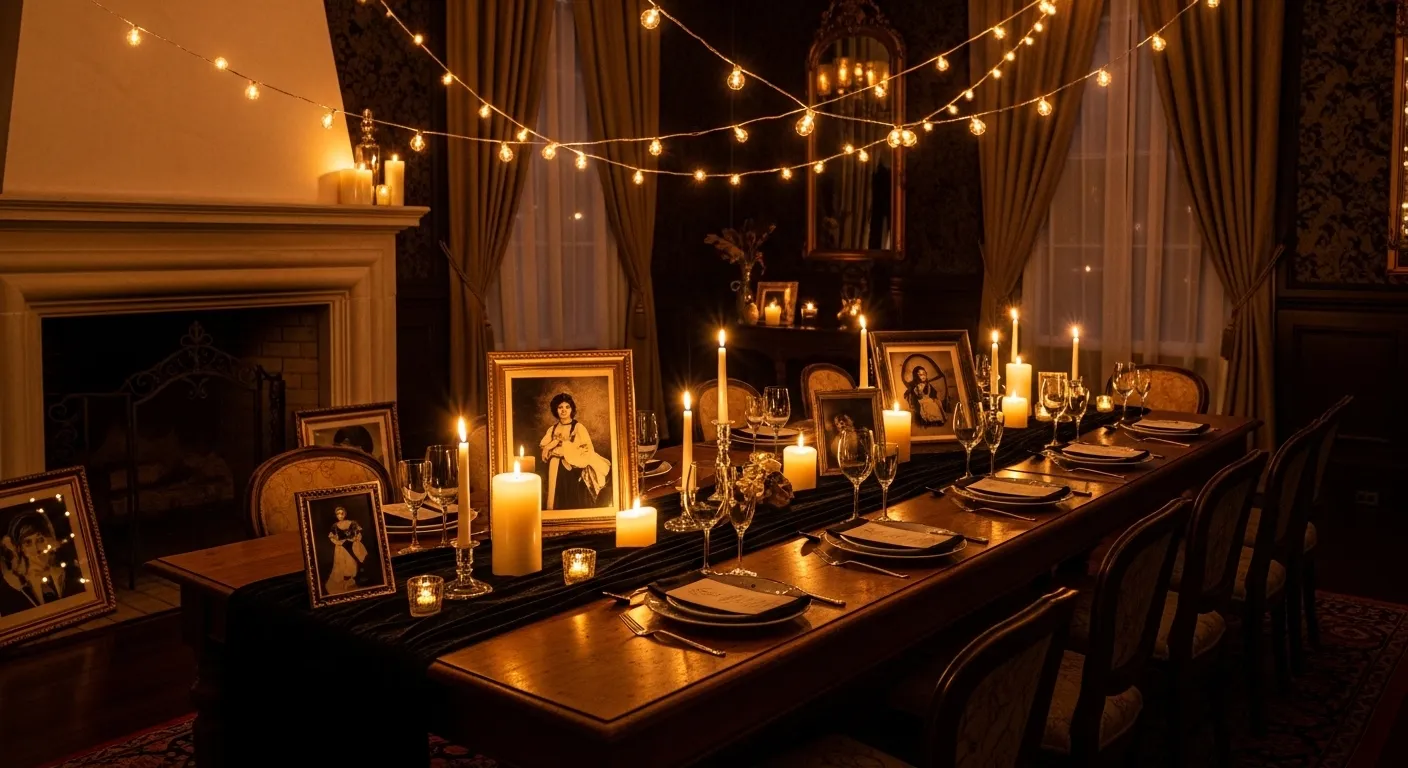
Dim your regular lights and replace them with candles in glass holders, string lights, or colored LED bulbs. Soft, low, moody lighting tells guests immediately that they are not in ordinary territory. Pair that with a curated playlist — jazz for the 1920s, classical strings for a Victorian setting, country twang for the Wild West — and the atmosphere practically builds itself before a single word of the mystery has been spoken.
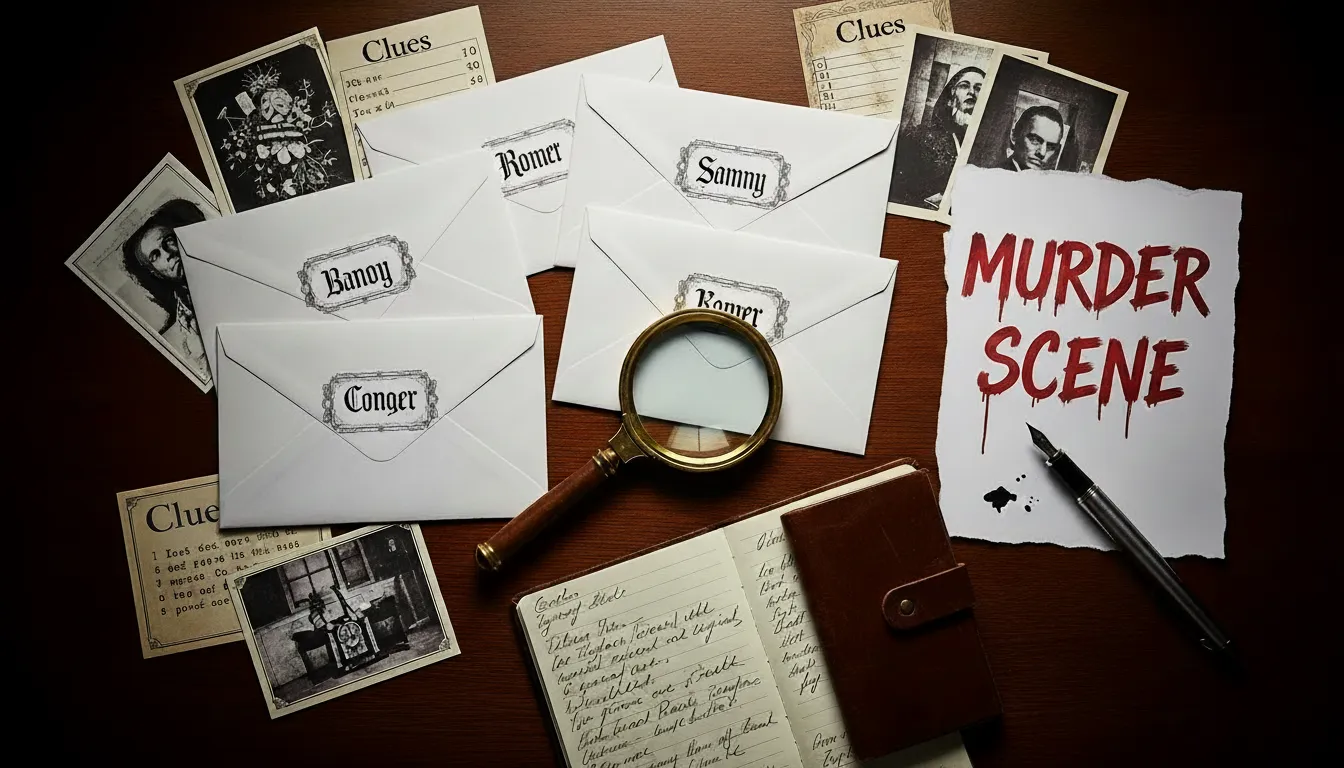
For decorations, focus on props that belong in the world of the theme rather than generic party supplies. Old books stacked on the table, framed “portrait” prints of fictional characters, a blackboard with a crime scene diagram, scattered fake evidence envelopes, and candelabras all cost very little but add enormous immersive weight. Set up a small “evidence table” where guests can examine prop clue items throughout the evening — a torn letter, a mysterious photograph, a suspicious keepsake.
Themed Food and Drinks
Your menu does not need to be elaborate, but it should nod to the theme. A 1920s speakeasy night calls for cocktails with dramatic names, finger foods served on round trays, and something sweet like petit fours for dessert. A Wild West evening calls for hearty BBQ-style food, cornbread, and something served in mason jars. A Victorian whodunit might feature finger sandwiches, deviled eggs, and an ornate dessert table.
Label each food and drink item with a small themed card. A cocktail called “The Accused” or a dessert named “The Evidence” adds levity and keeps the immersion running even during the meal. For food and drink ideas that pair well across different party themes, the Food & Drinks section on Party Monster has plenty of inspiration to draw from.
Running the Game at Night
As host, your primary job on the evening itself is to keep the energy moving and ensure every guest feels engaged. With a good game kit, the mechanics will do most of the heavy lifting. Your role is to set the tone at the door, monitor the pacing, and intervene gently when things stall.
The Opening: Setting the Stage
Greet guests in character if you can manage it — it is not mandatory, but it signals immediately that the evening is going to be different from a regular dinner party. Give everyone their name tags, any physical prop cards they need, and a brief verbal recap of the rules: who they are, what their goal is, and how the clue-sharing will work. Keep the instructions short and conversational. Long rule explanations at the start kill energy fast.
Allow a mingling phase of about 20 to 30 minutes before the formal game mechanics begin. This is when guests settle into their characters, introduce themselves, and start building the web of suspicion that will drive the rest of the evening. Play your theme music, serve the first round of drinks, and let the drama build organically.
The Murder Reveal and Investigation
When the time comes for the “murder” to occur — usually about a third of the way through the evening — make it theatrical. A dramatic announcement, a sudden scream, or a note discovered on the evidence table all work well. From this moment, guests move into investigation mode: gathering clues, questioning each other, and protecting their own secrets.
Monitor the pacing carefully. If the game is moving too fast and guests are close to solving it too early, introduce a red herring or an unexpected plot twist to slow the pace. If energy is flagging, prompt quieter characters to share a revelation or steer two guests into a direct confrontation. Your instinct as a host — reading the room and adjusting — is the single most valuable tool you have.
The Big Reveal and Celebration
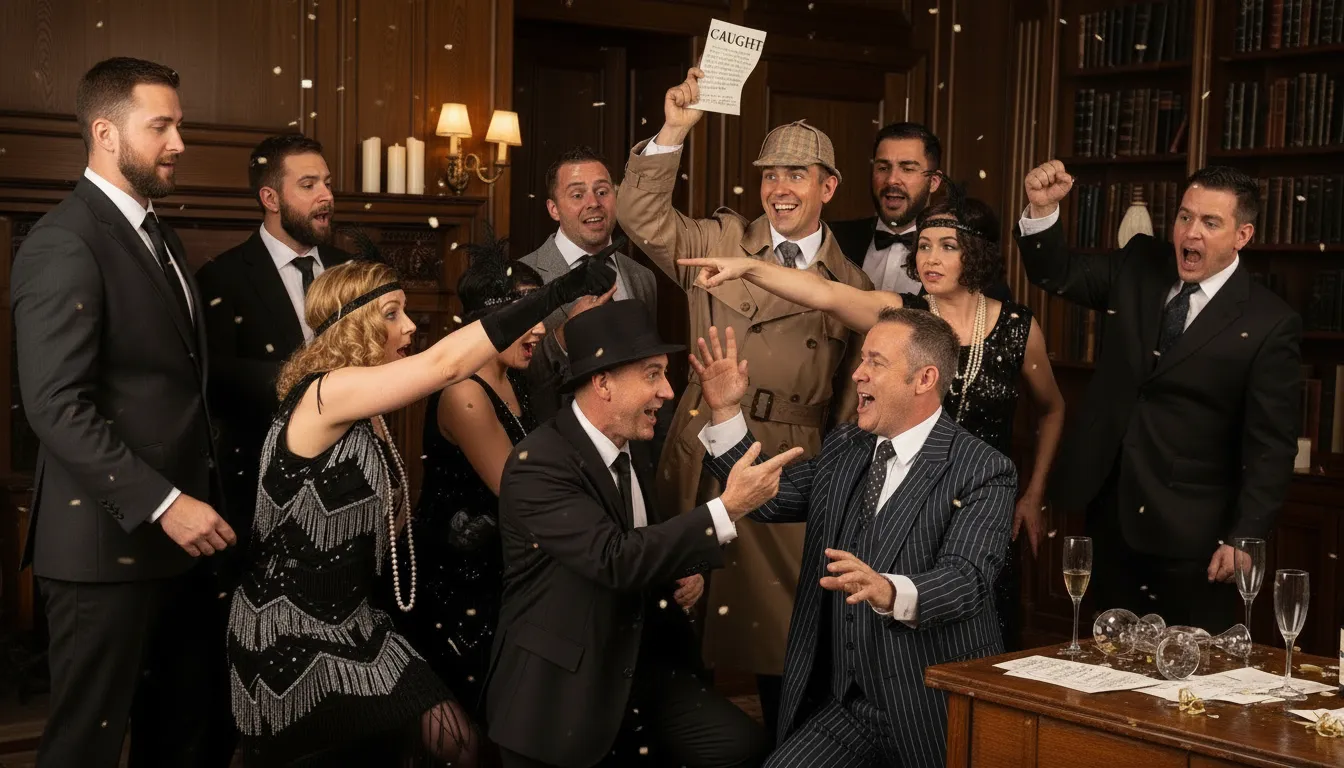
The final vote and reveal is the emotional climax of the evening, and it deserves to be treated as such. Collect written votes from every guest — who they believe the murderer is and why — before announcing the truth. The act of submitting a vote gives everyone a stake in the outcome, even guests who were not deeply engaged in the investigation.
Read the votes aloud before revealing the killer. This builds suspense, sparks last-minute debates, and gives the accused character their moment in the spotlight — whether they are guilty or not. Then reveal the killer dramatically, explain their motive, and give the killer a moment to “confess” in character. Expect cheers, gasps, accusations of “I knew it!” and at least a few people insisting they had the wrong person.
Awards and Wrap-Up
End the evening with a lighthearted awards ceremony. Common categories include Best Actor, Super Sleuth (best detective work), Most Dramatic Performance, Best Costume, and Most Convincing Liar. Many game kits include printable award certificates — if yours does, use them. This final touch gives every guest a takeaway moment and keeps the energy high all the way to the end of the night.
Take photographs throughout the evening — guests in costume, the murder reveal moment, the award ceremony. These photos become the lasting memories of the event and, if your group is anything like most, will generate more post-party conversation than any standard gathering ever could.
Tips to Make Your Murder Mystery Party Unforgettable
A few final details that separate a good murder mystery party from an exceptional one:
- Read through the entire game kit before the party — surprises on the night belong in the story, not in the host instructions.
- Prepare a guest essentials station — a table near the entrance with name tags, character packets, and a brief “rules card” so guests can orient themselves without needing a lengthy verbal briefing.
- Embrace the awkward beginning — the first ten to fifteen minutes of character interaction always feel a little stilted. Push through it. Once one person commits fully to their character, the rest follow quickly.
- Keep food easy to eat while mingling — finger foods, small plates, and passed appetizers work far better than a formal sit-down course that stops the investigation cold.
- Have a backup plan for no-shows — if a guest cancels last-minute, assign their character’s key clues to another player or double up the role. Most game kits include guidance on how to handle this gracefully.
- Let guests who are “eliminated” stay in the game — if your script has a victim who “dies” early, give that guest a secondary role or a secret informant status so they remain engaged throughout the evening.
A murder mystery party does not require perfection. It requires energy, preparation, and a group of people willing to lean into something a little theatrical. Get those three things right and you will have an evening your guests will reference for years.
Looking for more party game ideas to pair with your mystery night or to plan for your next gathering? Explore the Party Games section on Party Monster for a full range of interactive and immersive game ideas. And if you are thinking about building a full themed event around your mystery night, the Backyard Party Planning Guide and Decorations category have everything you need to set the perfect scene.