There is one thing that separates a party people remember from a party people attended: the details that felt intentional. A signature cocktail is one of the most powerful of those details. It is a drink that says someone thought about this gathering, about the vibe, about the guests — and turned all of that into something you can sip.
Whether you are hosting a birthday dinner for fifteen, a backyard celebration for forty, or an intimate cocktail evening for eight, a custom drink menu transforms your bar setup from generic to genuinely memorable. Guests photograph it. They share it. They ask you for the recipe. And you get to enjoy your own party instead of spending it behind a shaker making drinks one at a time.
This guide walks you through everything you need to build a standout party drink menu — from choosing a spirit and developing the flavors, to naming your creation, batching it for a crowd, and presenting it in a way that makes guests reach for a glass the moment they walk in.
Why Every Party Deserves a Signature Cocktail
A signature cocktail does more than give guests something to drink. It anchors the atmosphere of your event, reinforces your theme, and gives people an immediate conversation starter. When guests arrive and see a beautifully labeled glass dispenser filled with something called “The Backyard Breeze” or “The Birthday Spritz,” the party feeling kicks in before they have even said hello to the host.
From a practical standpoint, a signature cocktail also simplifies everything behind the bar. Instead of fielding individual drink requests all evening, you set out a beautiful self-serve station, batch your cocktail in advance, and spend the night with your guests rather than your shaker. A curated menu of three to five drinks provides variety without overwhelming guests or slowing down service — and it signals a level of hosting intention that store-bought wine on its own simply cannot replicate.
In 2026, the trend toward layered, visually striking drinks that double as a party centerpiece is stronger than ever. According to Life is Suite’s 2026 cocktail trend report, drinks are increasingly designed as sensory experiences — with visible layers, botanical garnishes, and presentations that are just as photogenic as they are delicious. Your signature drink is a piece of that larger trend, and it is easier to execute at home than you might think.
For more ideas on building a complete party experience around your food and drink choices, explore the Food & Drinks section on Party Monster.
How to Choose Your Base Spirit
Every great signature cocktail starts with a spirit decision. The base spirit shapes the entire flavor profile of your drink, influences which mixers and garnishes will complement it, and should reflect both your personal taste and the vibe of your event. Here is a quick guide to matching spirit to occasion:
Vodka
Vodka is the most neutral and crowd-friendly base spirit, which makes it ideal for large, mixed gatherings where you are not sure of everyone’s preferences. It plays well with citrus, fruit juices, sparkling water, and herbal additions. A vodka-based cocktail can be bright and refreshing for a summer party or rich and warming with spiced mixers for a fall gathering.
Tequila and Mezcal
Tequila and mezcal have become the spirits of the moment for a reason — they have depth, versatility, and enormous crowd appeal. Tequila pairs beautifully with citrus, agave, jalapeño, watermelon, and tropical flavors. Mezcal adds a smoky complexity that makes it ideal for more sophisticated, intimate gatherings. Both work brilliantly in batched margarita variations.
Gin
Gin is the spirit of choice for garden parties, floral themes, and elegant dinner gatherings. Its botanical notes pair naturally with elderflower, cucumber, tonic, and fresh herbs. A lavender gin and tonic or a cucumber elderflower cooler is one of the most photographed drinks at any party for a reason — it looks as beautiful as it tastes.
Bourbon and Whiskey
Bourbon and whiskey signatures suit autumn and winter parties, backyard fire pit evenings, and gatherings with a warmer, more rustic feel. Honey, citrus, maple, apple, and cinnamon are natural companions. These spirit-forward cocktails tend to be more complex and appeal strongly to guests who want something with substance rather than sweetness.
Wine and Sparkling Wine
Wine-based signatures — spritzers, sangrias, and sparkling punches — are some of the most accessible and universally loved party drinks. They batch effortlessly, look stunning in large glass dispensers, and appeal to the widest possible range of guests. A seasonal sangria or a sparkling rosé spritz sets a beautiful, festive tone with minimal bartending effort.
Signature Cocktail Flavor Framework
A well-built cocktail balances four key elements: spirit, sweet, sour, and dilution. Understanding this structure makes it infinitely easier to develop your own signature recipe without having a bartending background.
The Basic Formula
A reliable starting point for almost any shaken or stirred cocktail is: 2 parts spirit : 1 part sweet : 1 part sour : splash of something special. The “something special” is where your signature element lives — an infused syrup, a flavored liqueur, a fresh herb, an unusual garnish, or an unexpected mixer that makes the drink distinctly yours.
For example, a classic margarita is 2 parts tequila, 1 part triple sec, 1 part lime juice. Your signature version might be 2 parts tequila, 1 part honey-jalapeño syrup, 1 part fresh grapefruit juice, and a smoked salt rim. Same structure, entirely different drink — and completely yours.
Think in Seasonal Layers
The simplest way to make a cocktail feel intentional and on-trend is to build it around whatever is fresh and seasonal right now. According to The Bar’s cocktail creation guide, incorporating seasonal ingredients is one of the most effective ways to elevate a home cocktail — floral-forward flavors like elderflower or violet syrup pair naturally with gin in spring, while citrus and tropical fruits carry summer recipes, and warm spices like cinnamon, cardamom, and apple define autumn and winter signatures.
Balance Your Drink Menu Across Flavor Profiles
If you are offering more than one signature drink, aim to balance the menu across different flavor profiles so every guest finds something that appeals to them. A well-rounded party drink menu typically includes:
- One light and refreshing option — citrusy, bubbly, low in sweetness
- One fruit-forward option — colorful, approachable, and visually striking
- One spirit-forward or complex option — for guests who want something with depth
- One zero-proof signature mocktail — presented with the same care and garnish as the cocktails
Always include a beautifully crafted non-alcoholic option. In 2026, dedicated mocktail menus are no longer an afterthought — they are expected. A botanical sparkling water with muddled herbs, a sparkling cranberry and rosemary spritz, or a grapefruit and ginger cooler served in the same glassware as the cocktails ensures every guest feels genuinely celebrated.
How to Batch Cocktails for a Crowd
The single most practical skill for a home cocktail host is batching — making your drinks in large volume ahead of time rather than mixing individual glasses throughout the party. Batching lets you prepare everything in advance, ensures consistency across every pour, and keeps you present with your guests rather than stuck behind a bar.
The Batching Formula
To scale a cocktail recipe for a crowd, multiply all ingredient quantities by your target number of servings, then adjust for dilution. Because you are not shaking each drink with ice — which naturally dilutes and chills a cocktail — you need to add water manually to recreate that effect. A good rule of thumb: add approximately 20% of the total batch volume as cold water if making ahead and chilling, or 15% if serving immediately with ice.
For example, if your batch totals 50 ounces of mixed spirits and mixers, add roughly 10 ounces of cold water before chilling. This prevents the cocktail from tasting too sharp and concentrated when it hits the glass.
What Batches Well and What Does Not
Spirit-forward cocktails like Negronis, Manhattans, and Old Fashioneds batch exceptionally well and actually improve in flavor after resting in the refrigerator for a few hours. Sour cocktails with fresh citrus juice also batch well, though the citrus should be added no more than a few hours before serving to preserve brightness. Cocktails with carbonation — tonic, soda, sparkling wine, ginger beer — should never have their fizzy components added to the batch. Prepare the base without carbonation, then add bubbles at the moment of serving or let guests top their own glasses at the station.
Cocktails that require egg whites or dairy for texture — like a Ramos Gin Fizz or a cream-based drink — do not batch successfully and should be made individually if you want to include them on your menu.
Quantities to Prepare
A reliable planning formula: assume each guest will have approximately two drinks in the first hour and one drink per subsequent hour. For a four-hour party with twenty guests, prepare roughly sixty cocktails. If you are serving beer and wine alongside your signature drinks, reduce that estimate by about a third. Always make slightly more than you expect to need — running out of your signature drink two hours into a five-hour party is one of the most common and avoidable hosting mistakes.
Naming and Displaying Your Drink Menu
The name and presentation of your signature cocktail are what transform a drink into a party moment. A creative name tied to the occasion, the theme, or the guest of honor gives your cocktail an identity that guests connect with instantly — and talk about long after the party ends.
How to Name Your Signature Drink
The best cocktail names are short, memorable, and tied to something meaningful about the event. Draw inspiration from the theme of the party, the season, a key ingredient, a reference that resonates with the guest of honor, or simply a feeling you want to evoke. Here are some approaches that consistently work:
- Named for the guest of honor: “The Julia Spritz,” “Max’s Mule,” “The Birthday Smash”
- Named for the theme: “The Backyard Breeze” (outdoor summer party), “The Garden Fizz” (botanical theme), “The Midnight Margarita” (dark-themed event)
- Named for the season or occasion: “The Harvest Mule,” “The First Snow Old Fashioned,” “The Solstice Sour”
- Playful and fun: “The Troublemaker,” “The Last Dance,” “The Opening Act”
Designing Your Menu Display
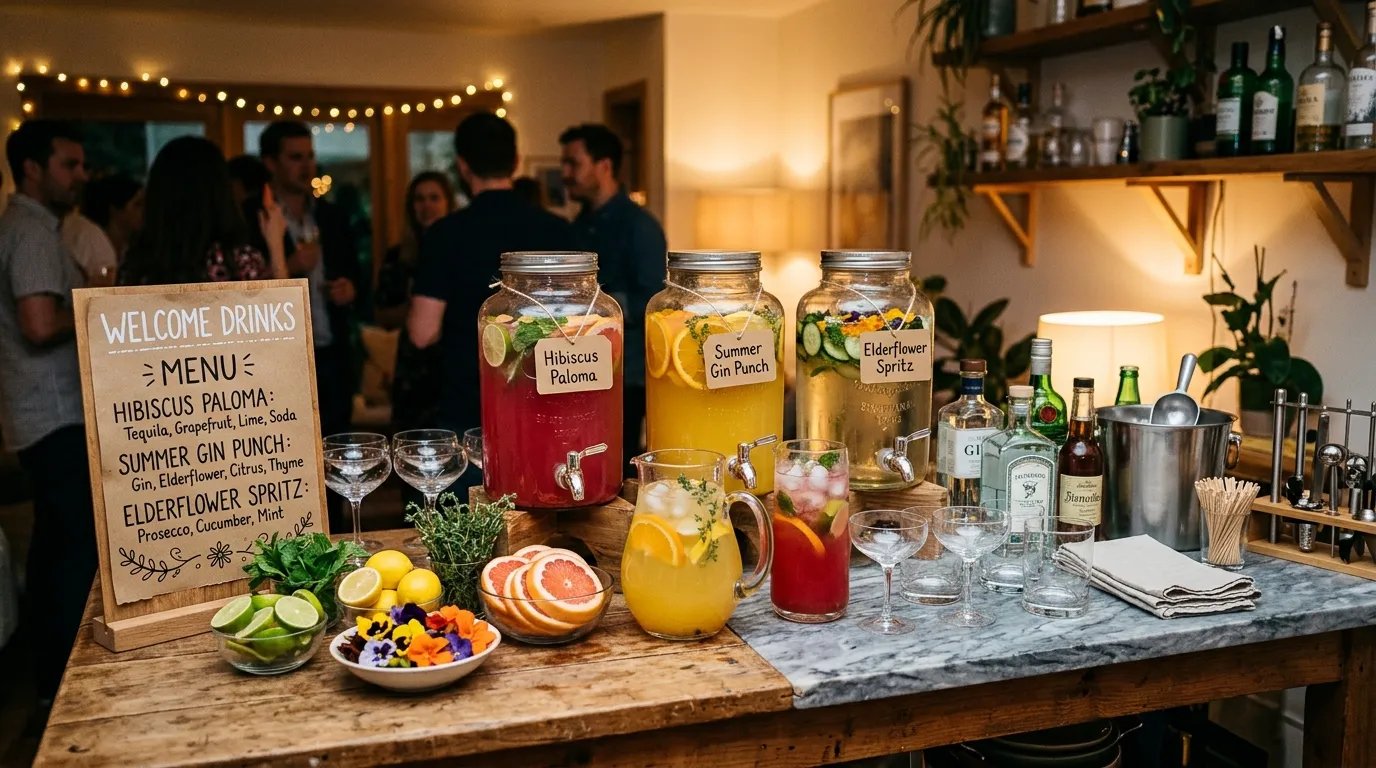
Your drink menu does not need to be professionally printed to look polished. A handwritten menu on kraft paper, a chalkboard sign, or a simple printed card in your party’s color scheme creates an instant visual focal point at your bar station. Include the drink name, the base spirit, and two or three key flavor notes so guests know immediately what they are reaching for.
Position the menu at the start of your bar setup, at eye level, where it is the first thing guests see when they approach the station. Add a small label or tag to each pitcher or dispenser that matches the name on the menu so the connection is clear. This small organizational detail makes self-service feel intentional and elevated rather than casual.
For cocktail menu design templates, Canva’s free cocktail menu templates offer a wide range of customizable designs that can be personalized with your event’s colors, fonts, and drink names in minutes.
Garnish Like a Pro: The Finishing Touch
Garnishes are the element that takes a cocktail from a drink in a glass to an object of genuine desire. They create the visual moment that guests photograph, the aromatic invitation that makes people lean in before their first sip, and the thematic detail that ties your drink to the wider story of your party.
Garnish Ideas by Occasion
- Garden or floral theme: Edible flowers (pansies, viola, lavender), cucumber ribbons, fresh herb sprigs
- Summer backyard party: Watermelon triangles, citrus wheels, fresh mint, berry skewers
- Elegant dinner party: Dehydrated citrus slices, long citrus peel twists, rosemary torched at the tip
- Fall or winter celebration: Cinnamon sticks, star anise, apple slices, fresh cranberry skewers
- Themed or colorful party: Colored sugar rims, edible glitter, custom stir sticks, cocktail picks with themed charms
Practical Garnish Tips
Prepare garnishes the morning of your party and store them in separate sealed containers in the refrigerator. Fresh herbs should be stored on a damp paper towel and citrus slices should be covered until just before serving. For batched cocktails served from a dispenser or pitcher, add floating garnishes — fresh fruit, herb sprigs — no more than thirty minutes before guests arrive, as they will wilt and lose their visual impact if left too long. Always prepare more garnishes than you think you need — plan for about 25% extra to account for spills and guests who request an extra touch.
Signature Cocktail Ideas to Get You Started
If you are looking for a starting point before you develop your own, here are five versatile signature cocktail frameworks that work beautifully at home parties. Each can be easily customized to match your theme, season, or guest list:
- The Botanical Spritz — gin, elderflower liqueur, fresh lemon juice, topped with sparkling water or tonic. Garnish with edible flowers and a cucumber ribbon. Bright, light, and endlessly photogenic.
- The Stone Fruit Margarita — tequila, peach or mango puree, lime juice, agave syrup. Tajín or chili-salt rim, fresh peach slice garnish. Bold, fruit-forward, and a universal crowd-pleaser.
- The Harvest Old Fashioned — bourbon, honey rosemary syrup, orange bitters. Served over a large ice cube with an orange peel twist and a torched rosemary sprig. Sophisticated and warming.
- The Garden Party Punch — rosé wine, elderflower cordial, cucumber slices, sparkling water, fresh mint. Served from a large glass dispenser with floating fruit and ice. Requires no spirits and has enormous visual impact.
- The Zero-Proof Signature — sparkling water, cranberry or pomegranate juice, fresh grapefruit juice, rosemary simple syrup. Garnish with fresh herbs and a citrus wheel. Served in the same glassware as the cocktails.
Your signature cocktail is one of the simplest and most impactful upgrades you can make to any party. It takes the same gathering and gives it a thread of intention that runs from the invitation to the final toast. And when guests ask for the recipe on their way out, that is how you know it worked.
For more party food and drink ideas that pair beautifully with your cocktail menu, explore the Easy Finger Foods for Parties guide and the full Party Planning Tips section on Party Monster.