There is a reason game night keeps appearing at the top of every party trend list going into 2026 — and it has nothing to do with board games suddenly becoming more interesting. It is because people are genuinely hungry for a kind of gathering where you actually interact. Where you look at the people in the room instead of your phone. Where the evening has a shape, a purpose, and a punchline, even if the punchline is just that someone lost spectacularly at Codenames and they deserve to hear about it for the rest of the night.
A game night party theme takes what could be an ordinary get-together and gives it energy, structure, and personality. It is one of the most versatile themes available because it scales beautifully — from six people around a coffee table to forty guests rotating through tournament stations in a backyard. It works for birthday celebrations, friend group reunions, couples nights, family gatherings, and any occasion where you want people to actually talk to each other rather than sit in parallel scrolling silence.
This guide walks you through everything you need to pull off a genuinely great game night party: the decor, the game selection strategy, the tournament format, the food, and the details that separate a memorable evening from a forgettable one.
Why the Game Night Party Theme Works So Well in 2026
The game night party theme has been trending for several years, but in 2026 it has hit a particular cultural moment. Across every age group — adults in their twenties, families with children, couples looking for alternative date nights — there is a genuine shift away from passive entertainment and back toward participatory experiences. People want to be in the event, not watching it.
Board games and party games create something that very few other party themes naturally generate: genuine conversation, friendly rivalry, shared stories, and the kind of laughter that only comes from someone rolling the wrong number at exactly the wrong moment. According to Paperless Post’s guide to hosting game nights, the best game night parties create shared experiences with friends that become memories worth more than any high score — and that emotional resonance is what brings people back for a second invitation.
The theme is also one of the most budget-friendly party concepts available. Your decoration budget is almost entirely optional — the games themselves become the decor. Your entertainment budget is zero. And your food budget stays relaxed because game night food is finger food and snacks, never a formal dinner. For more party theme ideas across every occasion and guest list, explore the full Party Themes section on Party Monster.
Decorating for a Game Night Party
The beauty of a game night party theme is that your decorations are already sitting on your game shelf. Board game boxes — with their bold graphics, bright colors, and distinctive typography — are the most visually striking and completely free decor element available. Stack them. Display them. Use them as table risers under smaller items. They do more visual work than most purchased party supplies and instantly communicate the theme the moment guests walk in.
Color Palette and Visual Energy
Game night decor should feel bold, playful, and high-energy — this is not a soft, romantic aesthetic. Primary colors work beautifully: reds, blues, yellows, and greens in combination create a graphic, board game aesthetic that feels instantly intentional. If you prefer a more curated look, choose a narrower palette — black and white with neon accent colors (yellow, red, green) gives a retro arcade feel, while deep jewel tones (navy, emerald, burgundy) with gold accents reads as a more sophisticated casino night variation.
Key Decoration Elements
You do not need a large decoration budget to make a game night party look great. Focus on a few high-impact elements:
- A “Welcome to Game Night” banner or chalkboard sign at the entrance or above the main playing area. Handwritten in chalk or printed in a bold, game-inspired font.
- Stacked and displayed board game boxes as table risers and visual anchors throughout the space. Group them by color or size for a more styled look.
- Dice and game piece motifs — oversized printed dice, playing card cutouts, or checkerboard table runners reinforce the theme without requiring elaborate sourcing.
- A leaderboard or scoreboard — a chalkboard, whiteboard, or large sheet of kraft paper taped to a wall where running scores are tracked throughout the evening. This single element transforms an ordinary game night into a genuine event.
- Labeled game stations — if you are running multiple games simultaneously or in rotation, small signs identifying each station (“Strategy Zone,” “Quick Rounds,” “Team Challenge”) add organization and a sense of intentional event design.
Lighting and Atmosphere
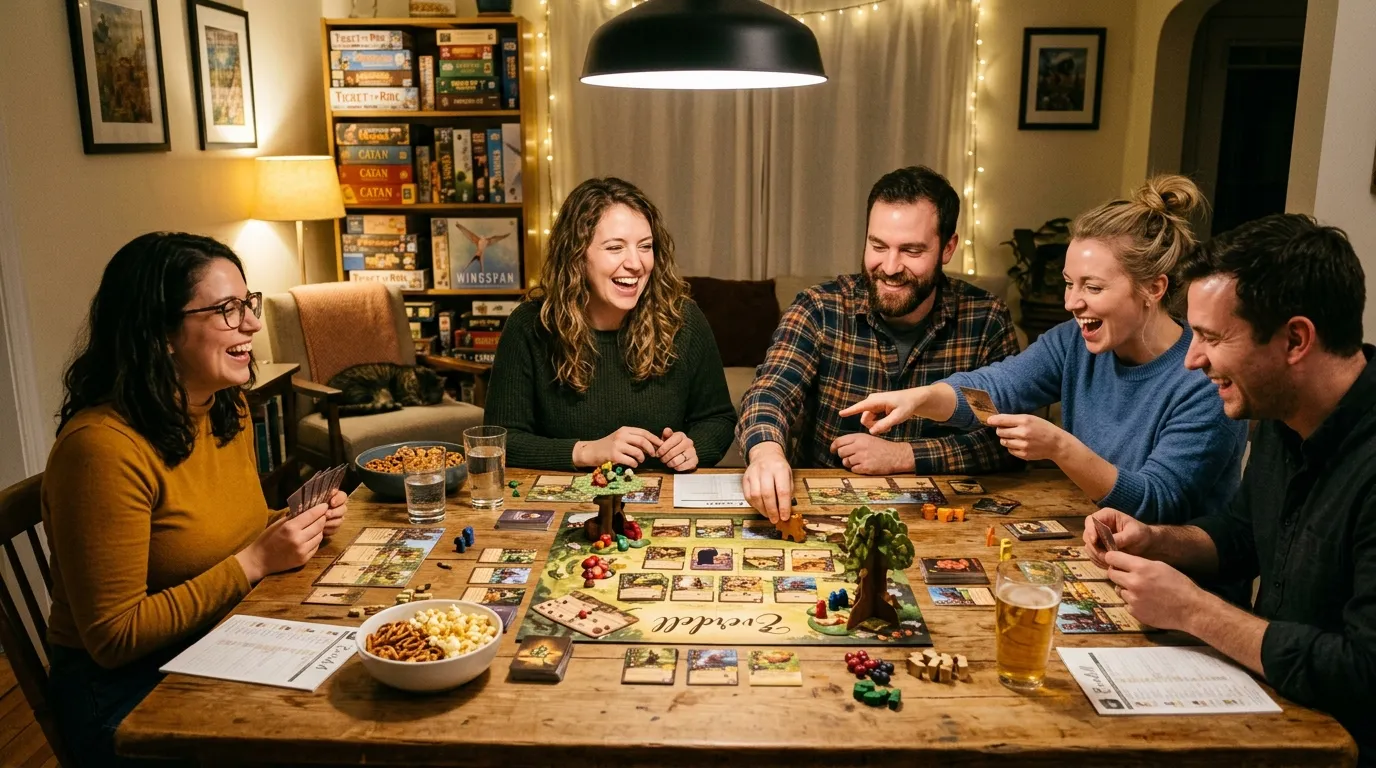
Game nights look and feel best in warm, ambient light rather than harsh overhead lighting. Use floor lamps, table lamps, and if the event runs into the evening, string lights strung across the ceiling or along walls create a warm glow that makes the space feel festive without feeling formal. The goal is bright enough to read game cards and roll dice comfortably — dimmer than a dinner party, livelier than a movie night.
Choosing the Right Games for Your Guest List
This is the most important decision you will make as a game night host, and it is worth spending real thought on before the evening arrives. The wrong games kill momentum. The right ones create the kind of energy that keeps people at your table two hours past when they said they needed to leave.
The Two-Category System
A well-run game night uses two types of games working together. The first category is warm-up and arrival games — quick, low-rules-overhead games that people can jump into as they arrive without waiting for a full group. These typically play in ten to twenty minutes, require minimal explanation, and work with varying player counts. Great options include Uno, Dobble (also known as Spot It), Codenames Duet, Skull, or Sushi Go. These games do social work — they break the ice, get people laughing, and give early arrivals something to do while the rest of the group assembles.
The second category is main event games — the reason you actually called the party. These take longer, require everyone at the table, and generate the big moments of competition and storytelling that people talk about afterward. For mixed groups and game-night newcomers, strong main event choices include Ticket to Ride, Azul, Codenames, Wavelength, Dixit, or Jackbox Party Pack (for groups comfortable with a screen). For more experienced game groups, Wingspan, Catan, or Betrayal at House on the Hill deliver richer experiences. Choose your main event game before the party and read the rules yourself so you can teach it quickly on the night.
Matching Games to Group Size
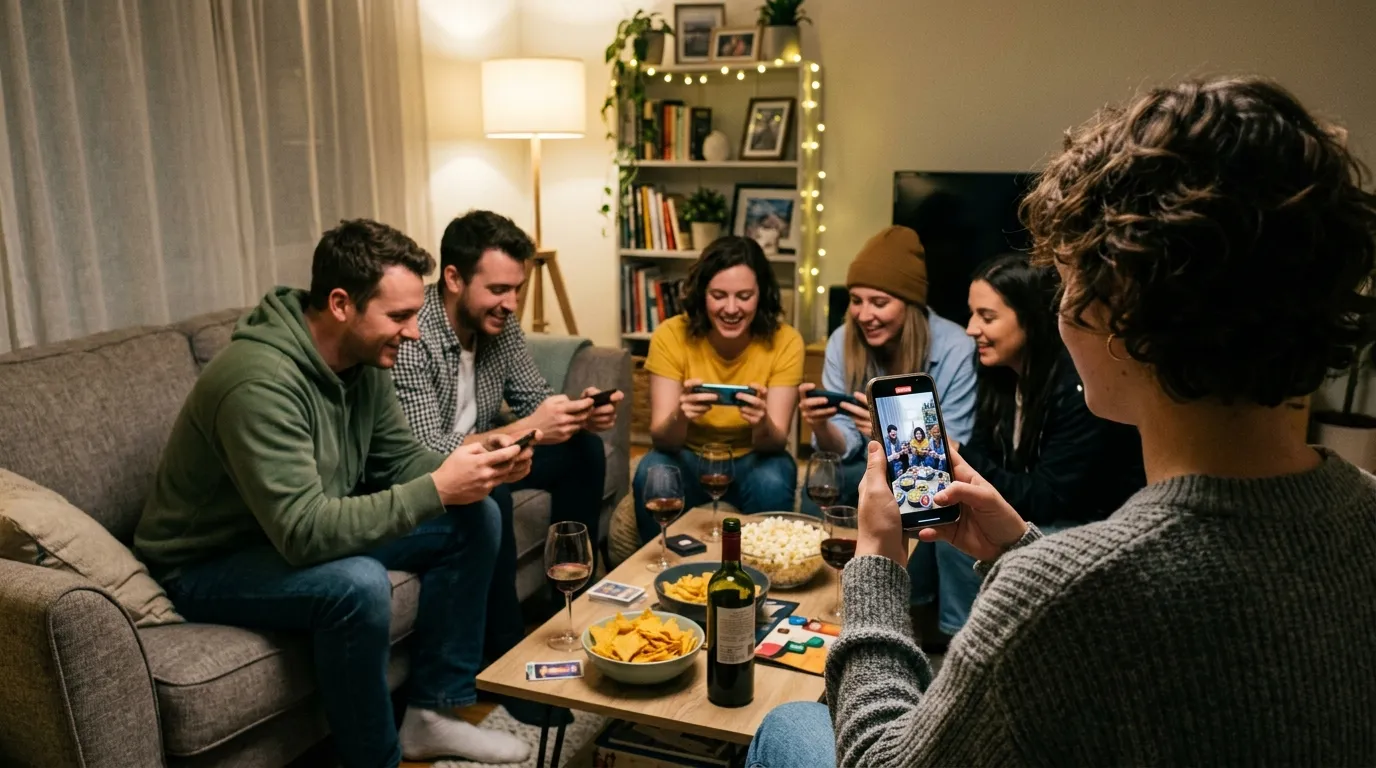
Guest count is the most important factor in game selection. Groups of four to six players work best for the widest range of games — this is the ideal game night size. Groups of eight or more work best when split into simultaneous tables playing the same game, or when using party-format games designed for large groups: Jackbox, Codenames, Wavelength, or any trivia format. For more game ideas across different group sizes and formats, check out the phone party games guide and the murder mystery party guide on Party Monster — both work beautifully as the main event at a game night party.
How to Run a Game Night Tournament
Elevating a regular game night into a proper tournament format is the single most effective way to make the evening feel like an actual event rather than a casual get-together. A tournament creates stakes, generates a narrative arc for the evening, gives guests a reason to invest emotionally in each round, and produces a champion who deserves to be celebrated.
Simple Tournament Formats That Work
For most home game night parties, a round-robin station format works best. Set up three to five game stations around the space, each with a different quick game. Guests rotate through the stations in pairs or small teams, accumulating points across all stations. After all rotations are complete, the running total on your scoreboard determines the winner. This format keeps everyone moving, prevents anyone from getting eliminated early, and generates constant action throughout the evening.
For single-game tournament nights, a Swiss-style format works well for groups of eight or more — everyone plays each round, pairings shift based on previous round results, and the top scorer after all rounds wins. This keeps even the lowest scorers engaged until the very end because nobody is eliminated.
The Scoreboard Makes the Difference
Whatever format you use, make your scoreboard visible, updated after every round, and announced dramatically. The leaderboard is the narrative engine of the evening — it creates conversation, friendly trash talk, comebacks, and upsets. Write names large enough to read from across the room. Announce standings at the midpoint and the end. The host who commits fully to this role turns an ordinary game night into something that feels like a genuine championship event.
Prizes and Recognition
Prizes do not need to be expensive to generate outsized excitement. A small trophy, a custom medal, or even a paper crown kept for the evening creates a winner’s moment that everyone photographs. Some of the most memorable game night prize ideas: a “reigning champion” sash passed from party to party across multiple game nights, a custom award for “Most Dramatic Defeat,” or a ridiculous booby prize for the last-place finisher. The humor and the ritual matter more than the monetary value.
Game Night Food and Drinks
Game night food has one cardinal rule: it must be hands-free and mess-free enough that people can eat it while actively playing. No forks, no knives, no dripping sauces over the game board. Everything should be finger food, individually portioned, and stable at room temperature for several hours.
The Game Night Snack Table
A well-stocked snack table is the heart of any game night party. It should be accessible throughout the evening — not a sit-down dinner — and offer a mix of salty, savory, and sweet options so guests can graze between rounds at their own pace. Consider organizing it around the games’ theme: a “Strategy Corner” with smarter, more satisfying bites alongside the competitive games, a “Quick Round” section with lighter, faster snacks.
Essential game night snack table staples:
- Chips and dips — multiple varieties (salsa, guacamole, hummus, ranch) in individual small bowls to prevent double-dipping issues
- Mini sliders or small sandwiches — satisfying, no-drip, and easy to eat in two bites
- Popcorn in individual cups — classic game night food that is genuinely mess-free
- Cheese and crackers — requires no refrigeration after being set out and appeals to almost every guest
- Vegetable sticks with dip — a lighter option that prevents the energy crash that comes from an all-carb spread
- Themed sweet bites — dice-shaped sugar cookies, checkerboard brownies, or candy in the party’s color scheme
For complete make-ahead finger food ideas that work perfectly for a game night spread, visit the Easy Finger Foods for Parties guide on Party Monster. And for drinks that elevate the evening without requiring a full bar setup, the Signature Cocktail Ideas post has batched options that guests can serve themselves throughout the night.
Game Night Drink Station
Set up a self-serve drink station that guests can access without interrupting the host. A beverage dispenser with a signature punch or infused water, a bucket of ice with bottled drinks, and clearly labeled cups with names written on them to prevent the “which one is mine?” problem that derails game momentum. For non-drinkers, a sparkling water station with citrus and herbs looks festive and keeps everyone equally refreshed.
Game Night Party Planning Timeline
A game night party comes together quickly relative to most party themes, but a little pre-planning makes the evening significantly smoother.
One to Two Weeks Before
Send invitations with the theme, dress code (optional — costume or “game night chic” can add fun), and any RSVP deadline. Confirm your game list and assign yourself the task of reading the rules to your main event game completely at least once before the party. Decide whether you are running a tournament and design your scoring system.
Two to Three Days Before
Gather all games and check that every box has all its pieces. Nothing derails game night faster than a missing card or a die that went under the couch six months ago. Print or prepare your scoreboard. Make any themed cookies or sweet bites that can be prepared ahead and stored.
Day of the Party
Set up game stations with clear space around each one. Position your scoreboard where everyone can see it. Set out the snack table and drink station fully before the first guest arrives. Pre-portion any dips into individual small bowls. Set out cups with a marker for name-writing. Test any digital games or apps you are using. Have a quick, two-player warm-up game ready for the first arrival.
During the Party
Your job as host is to keep energy high, enforce game rules fairly, update the scoreboard visibly and dramatically, and make sure no one is sitting out. If a game is not landing with the group, pivot without guilt — have a backup ready. The best game nights are the ones where the host reads the room and keeps momentum moving forward.
For more ideas on games that bring people together across different formats — from outdoor lawn games to phone-based party activities — explore the full Party Games section on Party Monster. And for complete party planning guidance from invitations to cleanup, the Party Planning Tips category has everything you need to host confidently.
A great game night party does not require an elaborate theme, a large budget, or an extensive game collection. It requires good people, a few well-chosen games, something worth eating within reach, and a host who commits fully to the role of making sure everyone is having fun. Get those four things right and the evening takes care of itself.